
On 6 September 2018, the Pre-Trial Chamber (PTC) of the International Criminal Court (ICC) reached a decision on whether the ICC has jurisdiction over the alleged deportation of the Rohingya from Myanmar (non-State Party to the Rome Statute) to Bangladesh (a State Party). The PTC by Majority held that the ICC has jurisdiction “if at least one legal element of a crime within the jurisdiction of the Court or part of such a crime is committed on a territory of a State Party.” (para. 64) While the outcome of the decision seems correct, the partially dissenting opinion raises concerns, mainly whether the issue was ripe for the PTC to entertain. In this post, I will revisit the Majority’s reasoning on its finding that the ICC has jurisdiction, whereas in the next post I will focus on Judge Marc Perrin de Brichambaut’s opinion. Continue reading “Revisiting the ICC’s Ruling on the OTP’s Rohingya Request over Jurisdiction: a more critical look. Part 1 – The Majority’s Decision”

Book Review – Punishing Atrocities Through a Fair Trial: International Criminal Law from Nuremberg to the Age of Global Terrorism
Punishing Atrocities Through a Fair Trial: International Criminal Law from Nuremberg to the Age of Global Terrorism, by Jonathan Hafetz, Cambridge University Press, 2018, 191 pages, £ 85.00 ($ 90.00)
You must put no man on trial under the forms of judicial proceedings if you are not willing to see him freed if not proved guilty…the world yields no respect to courts that are merely organized to convict.
Justice Robert H. Jackson,
Speech to American Society of International Law cited in Henry T. King, Jr’s The Legacy of Nuremberg, Case Western Journal of International Law 34 (2002), 335, 336
 If asked to recommend three books to a newly-minted judge at any of the international(ized) criminal tribunals or courts, but especially at the International Criminal Court (ICC), Jonathan Hafetz’s Punishing Atrocities Through a Fair Trial – International Criminal Law from Nuremberg to the Age of Global Terrorism (Punishing Atrocities) would be one of them. Indeed, I would suggest it as essential reading for judges, prosecutors, defense lawyers, and any judicial staff. I would also recommend Punishing Atrocities as obligatory reading for any introductory courses on International Criminal Law (ICL).

Jonathan Hafetz, a professor of law at Seton Hall University School of Law, admirably shows the tension between the need for establishing individual accountability for suspects and accused alleged to have committed or contributed to mass atrocities and the need to accord them fair trials based on recognized international principles and standards. Reconciling these two aims has been an ongoing process since the creation of the post-World War II International Military Tribunals at Nuremberg and for the Far East in Tokyo. While the divide remains, much progress has been made in affording greater due process to suspects and accused, in part, because of a higher recognition that acceptance of judicial results at the international(ized) criminal tribunals and courts is enhanced and fostered through fair trials and ensuing perceptions. Meanwhile, the experimentation of cobbling together procedural modalities from different legal systems for fairer procedural justice continues. Continue reading “Book Review – Punishing Atrocities Through a Fair Trial: International Criminal Law from Nuremberg to the Age of Global Terrorism”
Daw Aung San Suu Kyi’s remarks in context: is she defending the convictions and imprisonment of the journalists?
Q: You probably saw also, Vice President Pence yesterday appealed to you and to Myanmar to let the two Reuters journalists out of jail. I think they got a sentence of seven years. What is your response to Vice President Pence?
A: Well, I think what I want to know is whether they feel that there has been a miscarriage of justice. And you know of course, that due process allows them to appeal the sentence.
Q: But that, I guess, you also as a democratic leader don’t feel comfortable with journalists being jailed?
A: It’s not a matter of… They were not jailed because they were journalists. They were jailed because the court has…. Well, sentence has been passed on them because the court has decided that they had broken the Official Secrets Act. So, if we believe in the rule of law, they have every right to appeal the judgment and to point out why the judgment is wrong, if they consider it wrong.
Interview of Aung San Suu Kyi, State Counsellor of Myanmar by Børge Brende, World Economic Forum in Hanoi, Vietnam

In December 2017, Reuters journalists Wa Lone and Kyaw Soe Oo came across reliable information (eye-witness accounts and photographs) leading to the uncovering of a mass grave of ten Rohingya civilians in Inn Din, Myanmar, killed during a clearance (ethnic-cleansing) operation carried out in the Northern Rakhine State by Myanmar’s security forces (military and police) and local Buddhists in August 2017. Given the location of the burial site, the ongoing events in that area, the equipment required to dig and cover-up the mass grave, the bulldozing over and destruction of any remaining evidence, and the eye-witness accounts and photographs, it was clear that this atrocity was committed and then covered up by Myanmar’s security forces. Reuters would later write a lengthy story on this and other events (see my post), implicating Myanmar’s security forces along with its proxies – local civilians. Continue reading “Daw Aung San Suu Kyi’s remarks in context: is she defending the convictions and imprisonment of the journalists?”
Bolton threatens the International Criminal Court: gunboat diplomacy by other means
The United States will use any means necessary to protect our citizens and those of our allies from unjust prosecution by this illegitimate court.
John Bolton, US National Security Advisor

John Bolton’s “happiest moment” as the US Ambassador to the United Nations (UN), so he claims, was when he “personally ‘unsign[ed]’ the Rome Statute” that established the International Criminal Court (ICC).(( John Bolton, Surrender Is Not an Option: Defending America at the United Nations and Abroad, Threshold 2007, as cited by Brian Urquest, One Angry Man, New York Review of Books, March 6, 2008, pp. 12–15.)) This is the same John Bolton who once said that if the UN Secretariat building in New York “lost ten stories, it wouldn’t make a bit of difference.” And believe it or not, this statement would later bring hope to some of the accused (and some of their lawyers) at the International Criminal Tribunal for the former Yugoslavia (ICTY) when Bolton became US Ambassador to the UN; they naively thought that Bolton would lead the charge to dismantle the ICTY. I was flabbergasted hearing these ludicrous expectations, yet Bolton’s remarks had captured their imagination.
The ICC’s Ruling on the OTP’s Rohingya Request over Jurisdiction: well-reasoned or a judicial overreach?

On 6 September 2018, the Pre-Trial Chamber (PTC) of the International Criminal Court (ICC) held by Majority (Judge Marc Perrin de Brichambaut dissented in part) that the ICC has jurisdiction over some of the mass atrocity crimes allegedly committed (and, as some may argue, still being committed) in Myanmar against the Rohingya. This comes on the heels of the UN Human Rights Council’s conclusions that violations in Rakhine State (and elsewhere) in Myanmar amounted to the gravest crimes under international law, and, more alarmingly, that certain “clearance operations” conducted by the Myanmar Military (known as “Tatmadaw”) were not a response to a concrete threat from the Arakan Rohingya Salvation Army (ARSA), but the “unfinished job” of “solv(ing) the long-standing Bengali problem” thus warranting an investigation and prosecution of the senior officials in the Tatmadaw chain of command “so that a competent court can determine their liability for genocide in relation to the situation in Rakhine State.” (See Report of the Independent International Fact-Finding Mission on Myanmar, Advance Unedited Version, A/HRC/39/64, 24 August 2018, paras. 86-87.) Continue reading “The ICC’s Ruling on the OTP’s Rohingya Request over Jurisdiction: well-reasoned or a judicial overreach?”
The ICC’s Palestinian Outreach Campaign: an appearance of anti-Israel bias
THE CHAMBER HEREBY
a) ORDERS the Registry, to establish, as soon as practicable, a system of public information and outreach activities for the benefit of the victims and affected communities in the situation in Palestine and report back to the Chamber in compliance with the principles established in the present decision;
ICC, Decision on Information and Outreach for the Victims of the Situation, 13 July 2018
According to The Times of Israel, Israel has formally complained to the International Criminal Court (ICC) about the outreach program the ICC Registry is launching at the behest of the Pre-Trial Chamber (Judge Péter Kovács Presiding, Judge Marc Perrin de Brichambaut, and Judge Reine Adélaïde Sophie Alapini-Gansou) “for the Victims of the Situation” in Palestine, calling into question the ICC’s impartiality in treating Israel fairly. What took so long?
Israel has a point. And a predicament. Continue reading “The ICC’s Palestinian Outreach Campaign: an appearance of anti-Israel bias”
LOOKING FOR BAO NINH
On 14 August 2018, The Mekong Review published an essay I wrote about my search in the mid 90’s for Vietnamese writer Bao Ninh, author of The Sorrow of War. That essay, Looking for Bao Ninh, is reproduced below.

LOOKING FOR BAO NINH
I took my first trip to Southeast Asia in 1994. I went to Phnom Penh to volunteer, teaching trial advocacy skills for the Cambodian Defender Project. Showing up unannounced, I was told to come back a month later. So I headed north to Hanoi. Vietnam had opened its doors to foreign investment and tourism. It was an exuberant time, full of optimism. Continue reading “LOOKING FOR BAO NINH”
ICC-OTP to Interveners on its Rohingya Request: thanks but you’re putting the cart before the horse

Prompted by ongoing reports of mass-scale atrocities being committed against the Rohingya in Myanmar, resulting in at least 700,000 Rohingya fleeing across the border to Bangladesh (what UN High Commissioner for Human Rights characterized as “a textbook example of ethnic cleansing”), the Office of the Prosecutor (“OTP”) of the International Criminal Court (“ICC”) filed a Request with the Pre-Trial Chamber (“PTC”) under Article 19(3) of the Rome Statute. The Request seeks a binding decision on whether the ICC has jurisdiction over the alleged deportation of the Rohingya from Myanmar (a non-State Party) to Bangladesh (a State Party). The Request set out in detail the events in Myanmar as they have been reported over the past year or so (see my previous posts here, here, here, and here), that Myanmar security forces have directly and indirectly been involved in the killing, rape, torture, and enforced disappearances of the Rohingya, as well as destruction and looting of their villages. Continue reading “ICC-OTP to Interveners on its Rohingya Request: thanks but you’re putting the cart before the horse”
The Non-Reappointment of Judge Akay: a blow to judicial independence
If States are permitted to take action against a Judge in violation of the applicable international legal framework, judicial independence—a cornerstone principle of the rule of law—and the integrity of our court as such are fundamentally at risk, as is the overall project of international criminal justice.
Judge Theodor Meron, MICT President
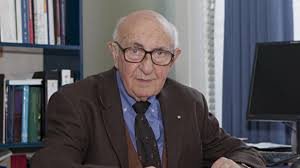
Kudos to Judge Theodor Meron for standing up for Judge Aydin Sefa Akay, and more importantly, for judicial independence. Let’s hope his admonitions do not amount to a lone cry in the wilderness of international justice.
How cowardly. Don’t count on the UN (here I am lumping in the Secretary-General, the General Assembly, and, especially, the Security Council) to live up to its obligations and show some backbone – even when failing to do so undermines its legitimacy and authority. All talk, no walk. Continue reading “The Non-Reappointment of Judge Akay: a blow to judicial independence”
Cutting the Gordian Knot: Settling the “Macedonian” question – Part 3
Part 3 – Getting to Yes
It helps to sit literally on the same side of a table and to have in front of you the contract, the map, the blank pad of paper, or whatever else depicts the problem. If you have established a basis for mutual trust, so much the better. But however precarious your relationship may be, try to structure your negotiation as a side-by-side activity in which the two of you–with your different interests and perceptions, and your emotional involvement–jointly face a common task.
Roger Fisher and William Ury
GETTING TO YES: Negotiating An Agreement Without Giving In, Penguin Books, 2nd ed. p. 38

A good day. His 79th birthday. He would celebrate it in a day or two with his family. Now he just wanted to take in the moment, to reflect, to enjoy the festive occasion. Not his birthday, but the signing of the Agreement between Greece and the former Yugoslav Republic of Macedonia (FYROM). Finally. Since 1991 when FYROM declared its independence, the two countries have been in a diplomatic row over FYROM’s adoption of the name “Republic of Macedonia,” naming its Slavic language “Macedonian,” calling its Slav citizens Macedonians, descendants of Philip II of Macedon and Alexander the Great, and adopting symbols which Greeks claim as part of their patrimony. Continue reading “Cutting the Gordian Knot: Settling the “Macedonian” question – Part 3”