
In my view, the rights of these 700 plus victims to express their views and concerns, as well as their rights to truth, justice and reparations, and to have an effective remedy, were at stake in this case. Having placed emphasis only on the rights of the accused, Judges Henderson and Tarfusser prematurely terminated the proceedings, without providing reasons. In doing so, they did not seem to have considered the rights of the victims. I recall the human rights are interconnected and indivisible, and there is no one human right that is more important than another. In my view, in no case can the rights of two accused be preferred over the rights of more than 700 victims without more, especially through a procedure that is not envisioned in the Statute, while the rights of the victims are duly established under the Statute.… [E]ven if Judges Henderson and Tarfusser, being minded to acquit, had concerns as to the liberty of the accused, there was no need to terminate the trial prematurely as the Trial Chamber had been seized of submissions on the continued detention of the accused and the judges could have granted provisional release. Instead, Judges Henderson and Tarfusser decided not to entertain such submissions and rather acquit the accused, halfway through the trial, under the no case to answer motions.
Dissenting Opinion of Judge Luz del Carmen Ibáñez Carranza
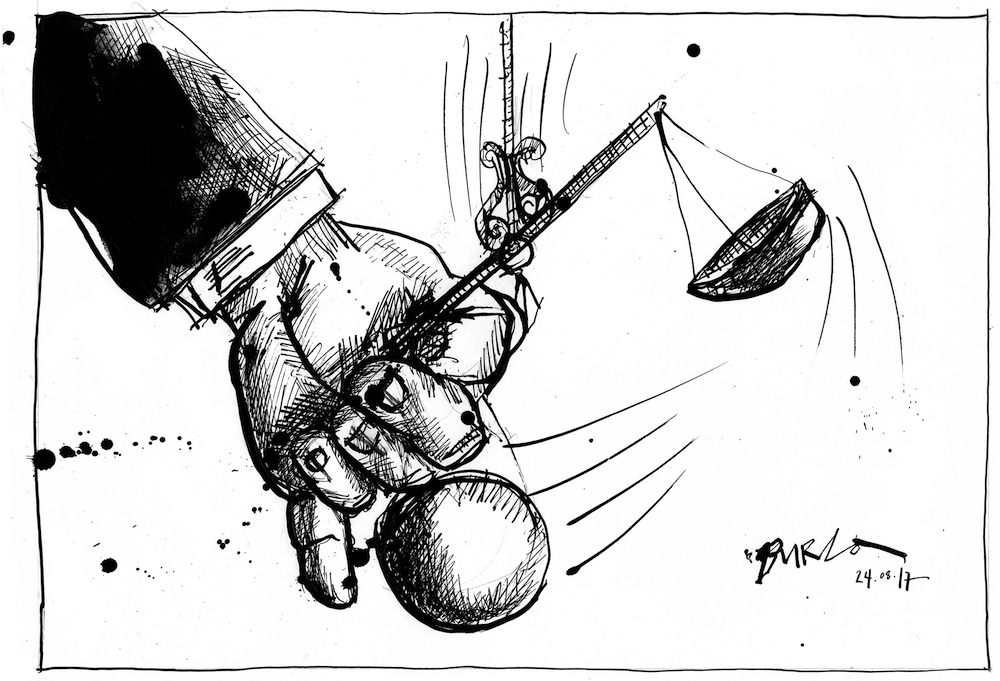 Occasionally a circumstance comes along when not correcting the record, when not speaking truth to power, when remaining silent out of fear of ruffling powerful feathers, is as uncomfortable as trekking in shoes a half-size too small, with a stone, or worse yet, a sharp thorn, in them. Here is one of those occasions. Aside from finding Judge Luz del Carmen Ibáñez Carranza’s understanding of no case to answer procedure at the ICC flawed and ill-conceived, as a defence lawyer I find her above quoted dissenting remarks shocking, even scandalous. So, let me bring some clarity on the seemingly pesky no case to answer procedure by discussing its purpose and why under the adopted ICC regime it is not only appropriate, but indispensable. I will then deal with Judge Ibáñez Carranza’s comments which seemingly suggest that judges should, in some instances, apply a utilitarianism test when deciding to what extent they should afford an accused their right to the presumption of innocence and whether, for the sake of the victims, the prosecution should be given a pass when unable to meet its burden of proof. Continue reading “MISAPPREHENDING THE ESSENCE OF NO CASE TO ANSWER & WHY IT IS INTRINSIC TO ICC TRIAL PROCEEDINGS: interpreting an accused’s fair trial rights through an inquisitorial victim-oriented humanitarian-centered prism “


