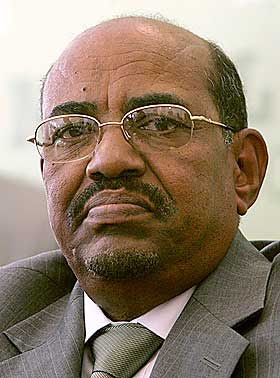
Gambia follows South Africa’s ICC exodus: quelle surprise


The Islamic Republic of The Gambia announced late Tuesday 25 October 2016 that it was withdrawing from the International Criminal Court (ICC), or as Gambian Information Minister Sheriff Bojang characterized it, “the International Caucasian Court for the persecution and humiliation of people of colour, especially Africans.”(( See also the statement of the Information Minister Sheriff Bojang on Gambian television posted on YouTube by the news agency The Fatu Network, 25 October 2016, available online here.))

The reason for Gambia’s departure is apparent.  About a two-thirds of the African states that have signed the Rome Statute that established the ICC view the ICC as a Western court targeting Africans while giving a pass on westerners who are believed by some African heads of state to have been involved in war crimes and crimes against humanity. Former British Prime Minister Tony Blair, as far as Gambia is concerned, is a prime example of a Western leader (or former leader) who should be in the ICC dock for his role in the Iraq war.  Fat chance. Continue reading “Gambia follows South Africa’s ICC exodus: quelle surprise”

Share

South Africa files for divorce from the ICC: the thrill is gone


On 19 October 2016, South Africa formally requested to withdraw from the Rome Statute, the treaty that established the International Criminal Court (ICC).  With Cabinet approval and in accordance with Article 127(1) of the Rome Statute, the South African government sent an “instrument of withdrawal” letter to the United Nations Secretary-General explaining its intention.

The withdrawal should take effect in a year, though South Africa remains obligated to comply with the Rome Statute until the withdrawal is final. According to a press release, Minister of Justice and Correctional Services Michael Masutha highlighted irreconcilable differences: “the South African government has found its obligations, with respect to the peaceful resolution of conflicts, at times incompatible with the interpretation given by the ICC.”  The press release also noted how “[o]ther African Union member states have accused the ICC of unfairness in servicing its mandate. They claim the court is targeting African states over other members.” Continue reading “South Africa files for divorce from the ICC: the thrill is gone”

Share

Response to comments on ethics enforcement inequality: the Superman vs. Batman dichotomy


I greatly appreciate that my esteemed colleagues Catherine Mabille and Luc Walleyn took the time to comment on my recent post:  Witness tampering convictions at the ICC: repercussions under Article 70.  Thanks Catherine and Luc for your comments.  Below is my response.


While I can understand the frustration and even anger over the double-standard when it comes to condemning defense lawyers for conduct that prosecutors get away with, I have yet to see where such arguments have traction as an excuse or an explanation for conduct that crosses ethical boundaries.  In some instances it may be useful to point out that the prosecution engages in certain conduct to demonstrate that the conduct is within acceptable bounds. But there is no merit to the argument that because the prosecution got away with such conduct in Lubanga, this kind of conduct should also be permitted in another case.  Continue reading “Response to comments on ethics enforcement inequality: the Superman vs. Batman dichotomy”

Share

Witness tampering convictions at the ICC: repercussions under Article 70


No legal system in the world can accept the bribing of witnesses, the inducement of witnesses to lie, or the illicit coaching of witnesses, nor can the ICC. Today’s judgement sends a clear message that the Court is not willing to allow its proceedings to be hampered or destroyed. It sends the message that those who try to distort and interfere with the administration of justice of this Court do not go unpunished.((Presiding Judge Bertram Schmitt, see audio visual recording of judgment delivery here.))

Yesterday, 19 October 2016, Trial Chamber VII of the International Criminal Court (ICC) delivered its judgement in the Bemba et al. Article 70 case.  All of the five accused were found guilty under Article 70 of the ICC Statute of various offences against the administration of justice in The Prosecutor v. Jean-Pierre Bemba Gombo. Continue reading “Witness tampering convictions at the ICC: repercussions under Article 70”

Share

ICC-OTP sets out its vision: a look at the horizon


On 15 September 2016, the Office of the Prosecutor (OTP) of the International Criminal Court (ICC) published its Policy Paper on Case Selection and Prioritisation (Policy Paper). Long overdue.

Policy papers can be instructive but do not always dictate the course of action that is ultimately taken.  Much has to do with the vision, drive, and inclination of the Prosecutor.   This was rather apparent with the first ICC Prosecutor, Luis Moreno-Ocampo, who was of the opinion that the goal of the court is to send a message to prevent future crimes, the so called “shadow of the court” goal. Continue reading “ICC-OTP sets out its vision: a look at the horizon”

Share

AL MAHDI CULTURECIDE JUDGMENT: A watershed moment for plea agreements


The rubble left from an ancient mausoleum destroyed by Islamist militants, is seen in Timbuktu, Mali, July 25, 2013. A former trainee teacher accused of damaging monuments in the name of Islam in the ancient Malian city of Timbuktu will stand before the International Criminal Court on March 1, 2016 for a hearing to decide if he should face a landmark trial. Picture taken July 25, 2013. REUTERS/Joe Penney - RTS8MB6
The rubble left from an ancient mausoleum destroyed by Islamist militants, is seen in Timbuktu, Mali, July 25, 2013.

On 27 September 2016 Ahmad Al Faqi Al Mahdi was sentenced to nine years for the war crime of attacking protected objects under Article 8(2)(e)(iv) of the Statute, specifically, “[i]ntentionally directing attacks against buildings dedicated to religion, education, art, science or charitable purposes, historic monuments, hospitals and places where the sick and wounded are collected, provided they are not military objectives.”((Prosecutor v. Al Mahdi, ICC-01/12-01/15, Judgment and Sentence, 27 September 2016, para. 11.))

In a previous post I discussed the plea bargaining process and trial or, as I call it, slow change of plea hearing.  I noted that in all likelihood Trial Chamber VIII would accept the plea agreement if satisfied that the facts proved the crimes admitted and if it found that the agreed period of time was commensurate with the gravity of the crimes.  Many have written on the Al Mahdi case. Some questioned the imperative for prosecuting such low-level crimes, and for not including other crimes that Al Mahdi allegedly committed, such as murder.  Others looked at the case as a major watershed for the ICC for prosecuting the destruction of religious and cultural property.  All who have commented on this case have made a valuable contribution in raising awareness on the importance of combatting against culturecide. Continue reading “AL MAHDI CULTURECIDE JUDGMENT: A watershed moment for plea agreements”

Share

The MICT model: panacea or chimera?

On 20 September 2016 a press release was issued by the United Nations Mechanism for International Criminal Tribunals (“MICT”), also referred to as “the Mechanism”, describing a presentation given by MICT President Judge Theodor Meron at The Hague Institute for Global Justice. The press release described President Meron’s view that the MICT presented itself as a new model for international justice. Under this model, courts could be more streamlined and cost-effective by having a roster of judges on call who would step into the breach only when needed, as opposed to being in situ, collecting a full-time salary with benefits. This model is likely the brave new world and is being advocated by some who are looking for alternatives or complements to the International Criminal Court (“ICC”). Continue reading “The MICT model: panacea or chimera?”

Share

Crimes Against Humanity – Part III: Is an attack by a state or organization against members of its own armed forces an attack directed against a civilian population amounting to a crime against humanity?

Part III

This is the third and final post dealing with the call for submissions by International Co-Investigating Judge Michael Bohlander of the ECCC who is currently investigating Cases 003 and 004.   Querying whether there was a lacuna in defining who may form a “civilian population” for the purpose of crimes against humanity, Judge Bohlander asked the parties and the amici:

Whether, under customary international law applicable between 1975 and 1979 [the temporal jurisdiction of the ECCC], an attack by a state or organisation against members of its own armed forces may amount to an attack directed at a civilian population?

As I noted in the first post, Judge Bohlander hinted that previous discussion on interpreting who constitutes a “civilian population” may have overlooked policy aspects such as whether there is a distinction between soldiers and civilians, and that such distinction “might only make sense if speaking of soldiers and civilians of an enemy population.”  He then opined or concluded – at least so it appears from his words – that “it would seem beyond dispute that a regime which in peace times tried to cleanse its own armed forces of, for example, all soldiers holding a particular ethnicity or faith, would be engaging in crimes against humanity, because the victims’ combatant quality merely because they are soldiers would be entirely irrelevant in this context…” and that “there is no reason to think otherwise if such a campaign happened in the course of or otherwise connected to an armed conflict.”(para. 5)

The first post dealt with the contextual background relevant to Judge Bohlander’s question and provided a synopsis of the overarching arguments put forward by the International Co-Prosecutor (“ICP”) and the amici who responded to the call for submissions.  Positions of the majority were relatively the same:  a state or organization’s own forces can constitute a civilian population for the purposes of crimes against humanity. The second post covers the amici’s and ICP’s arguments in detail though a series of questions inherent in their arguments.

In this final post, I set out the rationale behind the civilian population requirement and argue: Continue reading “Crimes Against Humanity – Part III: Is an attack by a state or organization against members of its own armed forces an attack directed against a civilian population amounting to a crime against humanity?”

Share

Ahmed al Faqi al Mahdi’s trial or slow change of plea hearing at the ICC?

Ahmad Al Faqi Al Mahdi

On 22 August 2016, Ahmad Al Faqi Al Mahdi entered a guilty plea before the Trial Chamber for destruction of cultural monuments in the UNESCO world heritage site in Timbuktu, Mali.((Prosecutor v. Al Mahdi, ICC-01/12-01/15-T, Video Recording of the Admission of Guilt, 22 August 2016, available at https://www.icc-cpi.int/mali/al-mahdi.)) Despite having admitted to the crimes charged, the case proceeded to a two-day trial.  The judgement and sentence are expected by 27 September 2016.((Prosecutor v. Al Mahdi, ICC-01/12-01/15-T-6-ENG, Transcript of the Trial Hearing, 24 August 2016, available at https://www.icc-cpi.int/Pages/record.aspx?docNo=ICC-01/12-01/15-T-6-ENG.))

Interesting as it may be to debate the merits of going after the likes of Al Mahdi and the significance of this case (see e.g., Mark Kersten in Justice in Conflict (2 posts) or Owen Bowcott’s article in The Guardian), I am interested in the trial. Or is it a trial? After all, Al Mahdi pled guilty, acknowledged the factual matrix in the charging document as accurately reflecting his conduct, and voluntarily, knowingly, and intelligently (understandingly) waived guaranteed fair trial rights, in particular the rights to be presumed innocent, against self-incrimination, and to have the prosecution prove each charge against him beyond a reasonable doubt.

So what is there to try?  Why put Al Mahdi through the crucible of having to retell that which presumably he has already told the Prosecutor or force him to effectively prove his guilt (having entered a guilty plea, there is a presumption that Al Mahdi is guilty) for the crimes for which he has already accepted responsibility and for which he is willing to bear the consequences? Continue reading “Ahmed al Faqi al Mahdi’s trial or slow change of plea hearing at the ICC?”

Share

Amnesty Part IV: The Case Against Saif al-Islam Gaddafi Before the ICC

In the previous post I examined the principle of ne bis in idem / double jeopardy, setting out the general characteristics, underlying rationale, exceptions to the principle, and its transnational applications.

This series on Saif al-Islam Gaddafi and the ICC was prompted by the press conference organized by Gaddafi’s lawyers calling for the ICC to dismiss the crimes against humanity (murder and persecution) charges against Gaddafi for which he has been indicted. Continue reading “Amnesty Part IV: The Case Against Saif al-Islam Gaddafi Before the ICC”

Share