
It is vacation time in Europe, where many of those working in the international(ized) tribunals and courts have taken off for the summer recess. One way of describing vacation is taking a leave of absence to do fun and enjoyable things such as visiting exciting places, laying on the beach, camping out, and so on. Another way to describe it is to vacate; to vacate from the grind at work, from the daily chores, from the pressures that come with being a responsible adult. More importantly, or should I say satisfying, vacationing is about vacating from thinking about matters that we, as members of our community, citizens of our states, and inhabitants of this planet, should care about. Continue reading “VACATIONING WITHOUT VACATING: an imperative for reflecting on the Blood Telegram”
Author: Michael G. Karnavas
Michael G. Karnavas is an American trained lawyer. He is licensed in Alaska and Massachusetts and is qualified to appear before the various International tribunals, including the International Criminal Court (ICC). Residing and practicing primarily in The Hague, he is recognized as an expert in international criminal defence, including pre-trial, trial, and appellate advocacy.

Taking the international out of justice: An imaginary conversation on the ICC’s Decision on South Africa
A woman dressed in a traditional Sudanese thobe walks out of Courtroom I of the International Criminal Court on 6 July 2017, having heard the decision of Pre-Trial Chamber II on the Situation in Darfur, Sudan – In the Case of the Prosecutor v. Omar Ahmad Al-Bashir. Shaking her head slightly, she has a look of disbelief, visibly upset. She is a Darfur victim, having moved to the Netherlands several years ago. Next to her is a smartly dressed gentleman, obviously someone important – or at least his appearance would so suggest: gold-rimmed round glasses, bespoke summer suit, crisp white shirt, with a stylish Montblanc pen visibly displayed in the pocket of his contrasting vest, glimpses of his tastefully matching Montblanc cuff links and Orbis Terrarum pocket watch, casually knotted bow tie, holding a white Panama hat of definite high quality, and a mahogany handled umbrella – probably an affectation but then one can never be too prepared in The Hague no matter the time of the year.
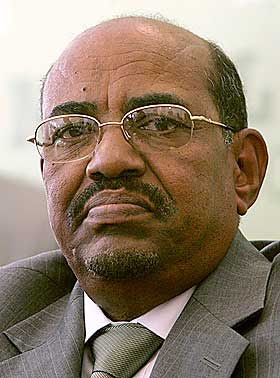
Suddenly, without the slightest trace of ambivalence, the woman turns to the gentleman and asks: What just happened? I thought I heard the Judges find that South Africa failed to comply with its obligation to arrest Al-Bashir but then said there was no need to do anything about it? If that’s the case, what’s the point of all of this? I thought the United Nations Security Council (UNSC) referred Al-Bashir to the International Criminal Court (ICC)? If there is an arrest warrant out for him, how can he have immunity? And if South Africa signed on to the ICC, why is it not cooperating? I don’t get all this stuff about South Africa having to consult with the ICC to figure out the obligations it agreed to under the Rome Statute. Continue reading “Taking the international out of justice: An imaginary conversation on the ICC’s Decision on South Africa”
Book Review: International Criminal Justice by Gideon Boas and Pascale Chifflet
International Criminal Justice by Gideon Boas and Pascale Chifflet, Edward Elgar Publishing, 2017, 235 pages, £ 80.00
How does what has been done, and what is to come, leave the world? Can we really ameliorate the horror of mass atrocity; can our responses be seen as a normative shift toward more accountability and prevention? Or are we merely travelling in circles? (p. x)
Reflecting on international criminal justice in the context of war crimes trials, Gideon Boas and Pascale Chifflet muse:
“[C]an it be said that war crimes trials are a successful method of achieving international criminal justice? Do they at least contribute to ending impunity? Are they really a deterrent for murderous dictators and would be genocidaires? Do they promote reconciliation in transitional communities? Or do they adversely impact on community rebuilding and on victims’ need to establish the truth, to be heard and to take control of their own narrative?” (pp. 7-8, italics added)
 In International Criminal Justice, Boas and Chifflet attempt, among other things, to answer this set of questions, or better yet, to lay out and comment on the divergent views held on what is international criminal justice and how to achieve it. Balanced and measured in recounting the views of others, Boas and Chifflet interject their own nuanced and qualified views without imposing them on the reader, allowing space for reflection. If there are strengths to this text – and there are many – this one stands out. Continue reading “Book Review: International Criminal Justice by Gideon Boas and Pascale Chifflet”
Distrusting the Standard Total View: A Tribute to Michael Vickery

On 29 June 2017, Michael Vickery, the legendary historian on Southeast Asia and perhaps the very best expert on ancient Khmer (Cambodian) civilization, passed away. He was, as one writer put it, a historian’s historian. I knew Vickery (or Michael no. 1 as I kiddingly referred to him when his name came up) for over two decades. I had the privilege of spending hundreds of hours with him. We talked about history and politics, but mostly about the pre-Khmer Rouge period when he first came to Cambodia, his research on the Khmer Rouge period (formally known as Democratic Kampuchea – “DK”), which generated several articles and perhaps one of the most lucid texts on that period, Cambodia 1975-1982, and the post-DK / post-Paris Peace Accords (1991) Cambodia. Vickery was my friend, my teacher, and when it came to critical historical analysis from which credible conclusions could be drawn, my mentor. Continue reading “Distrusting the Standard Total View: A Tribute to Michael Vickery”
Kosovo Specialist Chambers – Part 7: The Code of Judicial Ethics
This is the final post in my series on the Kosovo Specialist Chambers (“KSC”), a hybrid internationalized set of chambers founded to try war crimes, crimes against humanity, and other crimes under Kosovo law committed during the aftermath of the conflict in Kosovo (1998-2000).
For those of you who are just picking up on this series, a brief recap before diving into the Code of Judicial Ethics for Judges Appointed to the Roster of International Judges of the Kosovo Specialist Chambers (“KSC Code of Judicial Ethics”).
The KSC was established on 3 August 2015 with the passing of the Law on Specialist Chambers and Specialist Prosecutor’s Office (“KSC Statute”) and an amendment to the Kosovo Constitution by the Kosovo Assembly, following a report by the Council of Europe and investigations by a Special Investigative Task Force into alleged organ harvesting and various war crimes and crimes against humanity committed in the fallout of the conflict in Kosovo. Soon after being sworn in, the Judges adopted the KSC Code of Judicial Ethics on 14 March 2017, and on 27 March 2017 submitted the Rules of Procedure and Evidence (“RPE”) to the Specialist Chamber of the Constitutional Court (“SCCC”) for review – the Chamber responsible for interpreting the Kosovo Constitution as it relates to the KSC.(( KSC Statute, Art. 49(1). )) The SCCC found nine of the RPE to be unconstitutional, and a new draft of the RPE was referred back to the SCCC on 31 May 2017; judgment pending. Continue reading “Kosovo Specialist Chambers – Part 7: The Code of Judicial Ethics”
Cambodia conversation on being a criminal defense lawyer published in The Champion magazine
The May issue of The Champion, magazine of the National Association of Criminal Defense Lawyers (NACDL), contains an essay on being a criminal defense lawyer by my friend and colleague, Alan Yatvin.
Informal Opinion: Representing ‘Those People’ Achieves Justice
By Alan L. Yatvin
“How can you represent those people?” In three decades as a criminal defense attorney, I had heard that question many times — at cocktail parties and from prosecutors, police, victims, law students, and once even from a judge. It comes with the territory. I understand that people accused of crimes are often automatically condemned, while their lawyers are regarded with contempt. However, as I walked along that steamy January afternoon, I was shocked by the source of the question. This time it was my wife, Laura, prompted by a just completed hour-long audio tour of a former fruit orchard on the outskirts of Phnom Penh, Cambodia.
© 2017, National Association of Criminal Defense Lawyers™ (NACDL®), All Rights Reserved.
Kosovo Specialist Chambers – Part 6: The Rules of Procedure and Evidence (The Proceedings)
This is the sixth post in my series on the Kosovo Specialist Chambers (“KSC”), a hybrid internationalized set of chambers founded to try war crimes, crimes against humanity, and other crimes under Kosovo law committed during the aftermath of the conflict in Kosovo (1998-2000).
In my previous post, I discussed the Rules of Procedure and Evidence (“RPE”) governing investigations, arrests, and detention. In this post, I focus on the proceedings from pre-trial to appeal. While the KSC’s procedure is similar to that of the International Criminal Tribunal for the former Yugoslavia (“ICTY”), it also cherry picks here and there some of the more civil law modalities from the Rome Statute of the International Criminal Court (“ICC”). Continue reading “Kosovo Specialist Chambers – Part 6: The Rules of Procedure and Evidence (The Proceedings)”
Registrar Hosts Consultations on the ICC’s Legal Aid Scheme: so what!?
On 19 June 2016 the Registry of the International Criminal Court (“ICC”) hosted a full day consultation seminar on the ICC’s Legal Aid Scheme (“LAS”). The seminar followed the publication of two expert reports by the International Justice Consortium (“ICJC”) and Richard J. Rogers (the ICJC report is annexed to Rogers’ report), which I commented on in a previous post. The point of the seminar was for relevant stakeholders – ICC List Counsel, Counsel from other international(ized) criminal tribunals and courts, and organizations such as the International Criminal Court Bar Association (“ICCBA”) and the Association of Defence Counsel practising before the International Courts and Tribunals (“ADC”) – to exchange views with the Registrar on refashioning the LAS. Continue reading “Registrar Hosts Consultations on the ICC’s Legal Aid Scheme: so what!?”
Kosovo Specialist Chambers – Part 5: The Rules of Procedure and Evidence (Investigations and Arrest and Detention)
This is the fifth post in my series on the Kosovo Specialist Chambers (“KSC”), a hybrid internationalized set of chambers founded to try war crimes, crimes against humanity, and other crimes under Kosovo law committed during the aftermath of the conflict in Kosovo (1998-2000). In the previous post, I discussed general and structural matters regulated by the Rules of Procedure and Evidence (“RPE”). In this post, I will focus on investigations, arrests, and detention matters. Continue reading “Kosovo Specialist Chambers – Part 5: The Rules of Procedure and Evidence (Investigations and Arrest and Detention)”
Kosovo Specialist Chambers – Part 4: The Rules of Procedure and Evidence, General and Structural Matters
This is the fourth post in my series on the Kosovo Specialist Chambers (“KSC”), a hybrid internationalized set of chambers founded to try war crimes, crimes against humanity, and other crimes under Kosovo law committed during the aftermath of the conflict in Kosovo (1998-2000). In the first post, I provided the context and events leading up to the establishment of the KSC. In the second and third posts, I provided my observations on the Law on Specialist Chambers and Specialist Prosecutor’s Office (“KSC Statute”). In this post, and in the following posts, I focus on the Rules of Procedure and Evidence (“RPE”). Continue reading “Kosovo Specialist Chambers – Part 4: The Rules of Procedure and Evidence, General and Structural Matters”